

SBTi Analysis for Companies in Türkiye and Current Statistics
The increase in recent years in the number of companies in Türkiye setting SBTi (Science Based Targets initiative) targets reflects an important development in the field of sustainability and environmental responsibility. SBTi is a global initiative that encourages companies to set targets for reducing their carbon emissions on the basis of scientific data. The growth in commitments of this kind shows that companies are sensitive not only to financial targets but also to environmental impacts.
When we take into account sustainability-related reporting, commitments and similar initiatives, we see that the number of companies in the SBTi process is quite low compared with the number carrying out sustainability-related reporting and work such as CDP, GRI and EcoVadis. The responsibility of making a public commitment, shortcomings in achieving minimum emission reduction targets, and SBTi’s demanding validation and criteria processes may be among the reasons for this.
By the end of January 2025, we see that 10652 companies worldwide had taken a step into the SBTi process. Of these companies, 67% have had their targets approved. “Removed” indicates that the declaration has been withdrawn for reasons such as withdrawal of the commitment or expiry. The remaining companies are those that have made a commitment and intend to have their target approved within 24 months of that commitment.
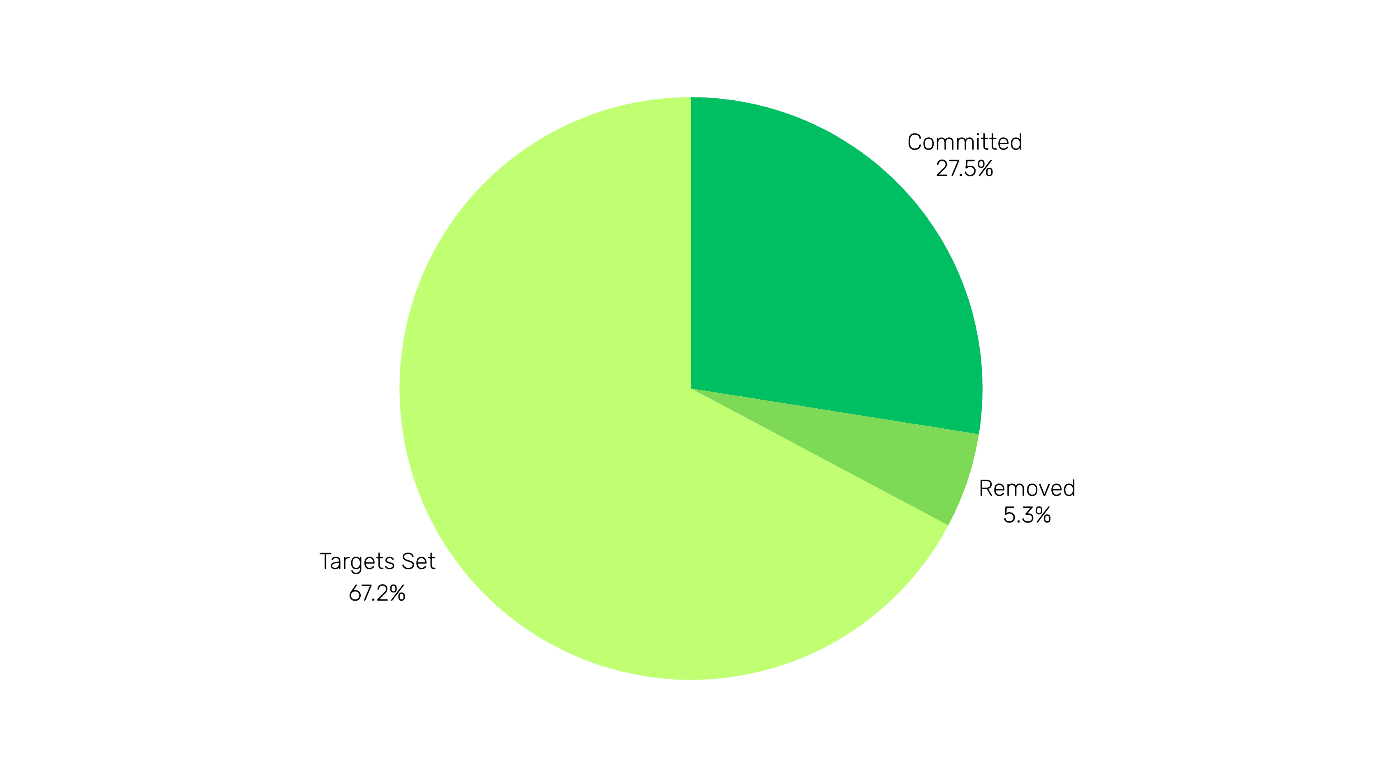
If we assess the situation in Türkiye, the number of companies that have entered the SBTi process as of the end of January 2025 is 101. Of 100 companies, the number with at least one approved target is 44.
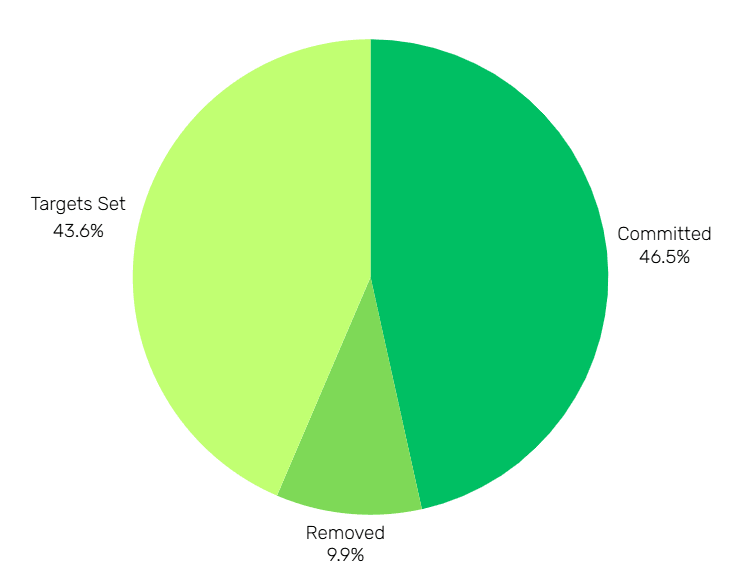
Company size is an important criterion in assessing the difficulty of SBTi processes. As a firm that has provided SBTi consultancy for many years, we can say that the commitment and validation process is more straightforward for companies classified by SBTi as SMEs. According to SBTi’s criteria, companies are treated as SMEs where they:
- have Scope 1 and Scope 2 emissions totalling less than 10,000 tCO₂e
- are not in the Financial Institutions (FI) or Oil and Gas (O&G) sectors
- are in a sector for which SBTi has not set specific criteria
- have annual turnover of less than €50 million
- have fewer than 250 employees
SME companies that want to set an SBTi-aligned target and have it approved by SBTi can advance their process by carrying out comprehensive GHG calculations for themselves and all their subsidiaries and applying to the verification service with the necessary application documents.
When we take large-scale companies and financial institutions into account, the number of companies comes out at 26.
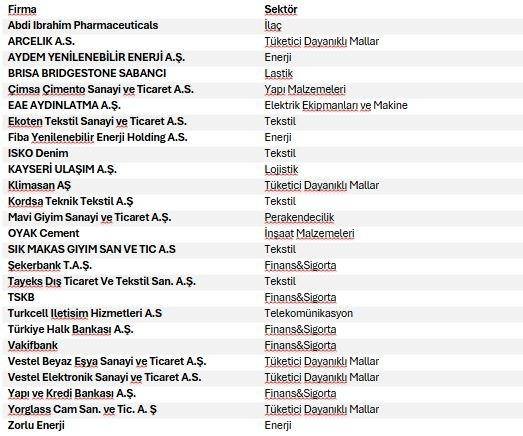
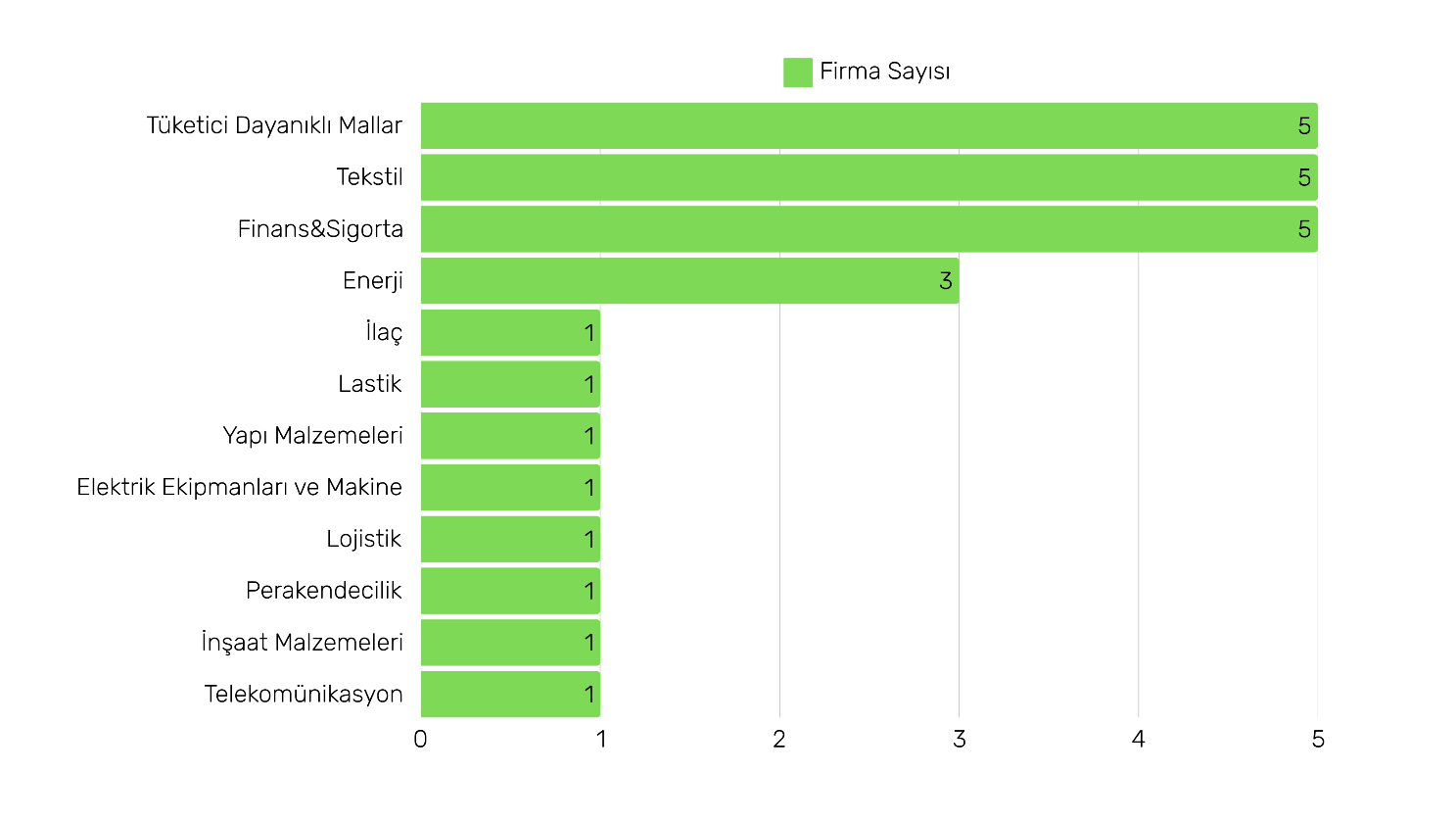
Assessed by sector, we can see that financial institutions, durable goods and textiles are the sectors in Türkiye showing the most interest in SBTi targets. This analysis was carried out for companies outside the SME scale, and these 3 sectors are followed by the energy sector.
Of the 25 companies with a near-term target, all but one also have a target aligned with 1.5°C. Within the SBTi (Science Based Targets initiative) framework, 1.5°C and well-below 2°C targets express two different degrees of target-setting aimed at limiting the global temperature increase. A 1.5°C target means limiting the global temperature increase to 1.5°C above pre-industrial levels. A well-below 2°C target means keeping the global temperature increase well below 2°C above pre-industrial levels. This target proposes limiting the increase to below 2°C, but is not as strict as 1.5°C.
The near-term targets of large-scale companies and financial institutions in Türkiye with SBTi targets are generally organised around the year 2030.
Looking at net zero targets, the number of companies with an SBTi-approved target is 5. Two companies have set their target for 2040, while all the others have set theirs for 2050.
Companies in Türkiye with an SBTi-aligned net zero target:
- ARCELIK A.S.
- Fiba Yenilenebilir Enerji Holding A.S.
- Kordsa Teknik Tekstil A.Ş
- OYAK Cement
- Zorlu Enerji
At Metsims, taking into account both our own processes and our market research, we believe that a good many companies will be added to the list of those with SBTi-approved targets in 2025.
How does the SBTi process work?
The SBTi process begins with the signing of the commitment letter and its transmission to the other party. Around November 2024 SBTi revised its processes and began carrying out validation through a company called SBTi Services. Operations previously conducted by email will continue to be carried out through the SBTi portal following the changes made in the new period. All company registration, application form uploads and the validation process will now proceed through the SBTi Services company’s digital platform. (https://sbtiservices.com/)
Companies that submit a commitment letter have 24 months for their targets to be approved. During this period the company carries out GHG calculations that will meet SBTi’s criteria, determines SBTi-aligned targets, and completes and submits the application form to SBTi officials. Depending on the volume of work, SBTi grants a validation appointment for 2–6 months later, takes the application files under review on the date given to the company, and passes on its questions according to any shortcomings. Answers to the questions raised are expected within 2 days, and during this process technical teams at various levels examine the application. Once all queries are closed, SBTi informs the company about approval and announces the publication date.
Difficulties in the SBTi process
SBTi processes are carried out against a crowded series of criteria. Entering the process without a foundation that meets the criteria can lead to a number of problems in terms of time management. If findings are not resolved within the specified period at the validation stage, or if requests are not met within the set time limits, the process may be disrupted. For this reason, preparing an application file that stands firmly on its own feet will be helpful for a smooth process.
Looking at SBTi’s target criteria, it is first of all compulsory for all subsidiaries to be included within the scope of the target and the GHG calculation. While all companies affiliated to the company making the SBTi commitment must be included in the process, parent organisations are not affected by this. Because of this rule, it becomes difficult for large structures such as holding companies, both in Türkiye and in other countries, to set targets.
While the number of companies carrying out GHG calculations worldwide is very large, only a very limited proportion of these calculations are fully compliant with the GHG Protocol. SBTi accepts only targets based on a comprehensive calculation made in accordance with the rules, and grasping every detail of the GHG Protocol and producing a carbon footprint calculation in line with it may not always be possible, because of both competence and the difficulty of collecting data. For this reason, the part of the SBTi consultancy process to which we attach the most importance is a successful GHG calculation.
Another difficulty in SBTi processes is FLAG emissions. SBTi requires a FLAG target to be set where FLAG emissions are calculated and their share of total emissions exceeds 20%. FLAG emissions are emissions relating to the Forest, Land and Agriculture sectors. Within the SBTi (Science Based Targets initiative) framework, FLAG emissions cover the carbon released by the destruction of forests, changes in land use and agricultural activities. Emissions in this sector may be direct (for example, the felling of forests or fossil fuels used in agriculture) or indirect (for example, emissions caused by tillage or livestock activities).
All these difficulties can readily be overcome with a good work plan and the support of the company’s management. At Metsims we are glad to provide consultancy support to companies in this process. You can get in touch with us for detailed information on the subject and for an assessment of the process specific to your company.