
Sustainability Agenda
2 June – 3 July 2026
7 updates
Water Efficiency Information System Is Now Open!
The Water Efficiency Information System has been launched for the application processes of the Blue Water Efficiency Certificate.
To initiate the certification process, an authorization request must first be completed for the authorized person who will carry out transactions through the system on behalf of the applicant organization.
Once the authorization request is reviewed and approved by the Ministry, organizations will be able to submit their Blue Water Efficiency Certificate applications through the Water Efficiency Information System
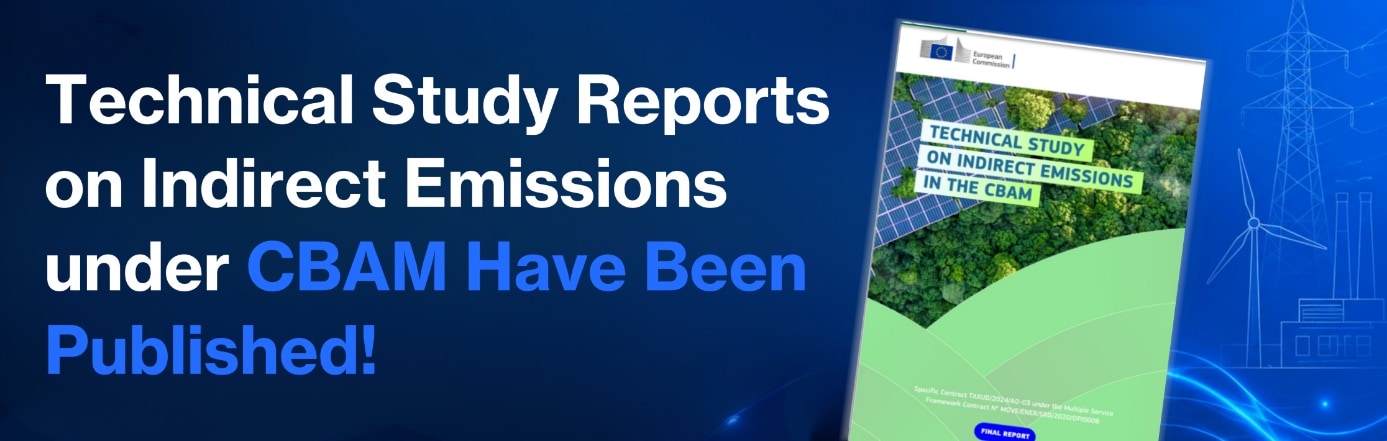
Technical Study Reports on Indirect Emissions under CBAM Have Been Published!
The European Commission has published technical study reports on how indirect emissions embedded in products imported into the EU from third countries may be addressed under the CBAM framework.
The reports examine the methodological framework for determining embedded indirect emissions in imported goods. In this context, they assess key aspects such as the conditions for declaring actual indirect emissions, direct technical links, power purchase agreements (PPAs), and verification requirements.
The studies also evaluate how the application of indirect emissions under CBAM may evolve in the future and the potential for this approach to be extended to additional sectors.
COP31 Action Agenda Announced!
The agenda highlights 10 priority themes focused on the world’s most urgent needs and the key implementation challenges faced by countries.
These themes include zero waste, clean energy and electrification, food security, green industrialisation, oceans and seas, climate-resilient cities, youth and education, dynamic and resilient health systems, Rio energy, and Climate Bridge Action.
The COP31 Action Agenda also sets out 6 global implementation goals. These goals focus on accelerating electrification, advancing zero waste and methane reduction, strengthening resilient cities and buildings, supporting green industrialisation, expanding awareness across all areas, and operationalising the Climate Implementation Bridge mechanism.
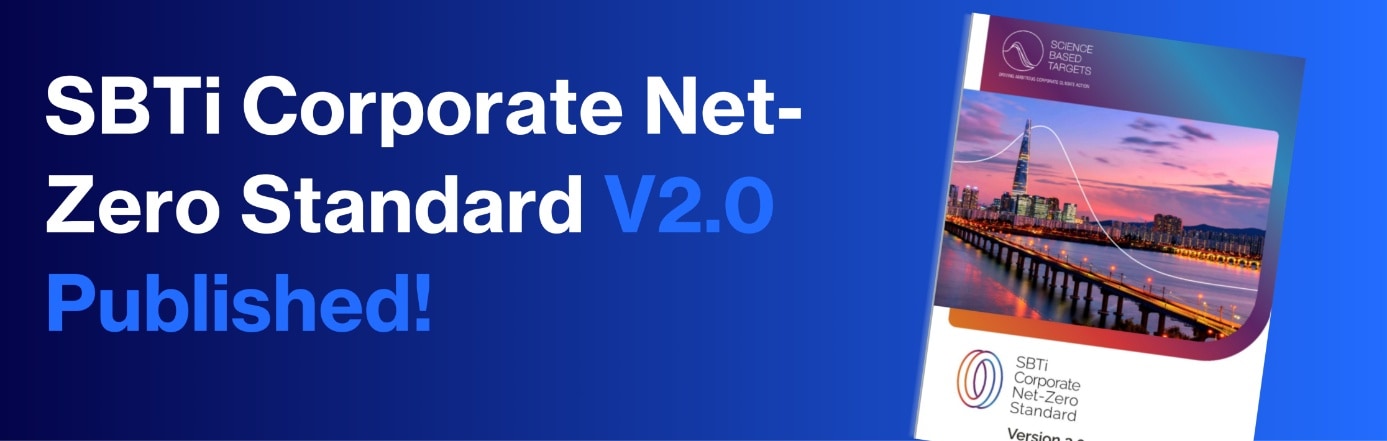
SBTi Corporate Net-Zero Standard V2.0 Published!
The Science Based Targets initiative (SBTi) has published the Corporate Net-Zero Standard V2.0, aiming to strengthen companies’ net-zero roadmaps in line with the latest climate science and evolving best practices.
The updated standard positions net-zero targets not only as long-term commitments, but as a transformation approach supported by strong governance mechanisms and integrated into business operations.
Key updates introduced under the standard include aligning near-term action with long-term climate goals, offering more flexible target-setting approaches across different emission scopes, and defining an implementation hierarchy to guide companies in delivering their emission reduction targets.
With V2.0, companies are expected to regularly monitor, assess, and publicly report their progress. This approach aims to strengthen transparency and accountability in corporate net-zero target setting.
The standard also introduces a recognition mechanism that encourages companies to take voluntary action to address the impact of their ongoing emissions. This framework supports efforts to limit temperature rise, manage transition risks, and scale climate solutions.
Council Publishes Draft Regulation on the Expansion of CBAM Scope
In December 2025, the European Commission proposed extending CBAM to selected downstream products and introducing additional measures to prevent circumvention. Following this proposal, the Council has now released its draft approach on the scope expansion.
While the current CBAM framework mainly covers basic production in carbon-intensive sectors such as iron and steel, cement, aluminium, hydrogen, electricity and fertilisers, the proposed update aims to broaden the mechanism by including new CN codes for selected downstream goods.Most of the products planned for inclusion consist of industrial goods with high steel and aluminium content, commonly used in heavy machinery and specialised equipment. A smaller share also includes certain household goods. The draft also introduces changes to the iron and steel CN code list and adds a new Combined Metal Goods category.
The draft further clarifies the list of products that are not directly within CBAM scope but may be considered as input materials, or precursors. In this context, ferrous scrap and aluminium scrap, excluding post-consumer scrap, may be included in precursor emissions calculations.
Following the European Parliament’s review and the plenary vote expected in September, negotiations between the Council Presidency and the European Parliament are expected to begin, with the aim of reaching an agreement before the end of the year.
Digital Product Passport (DPP) FAQ Document Published!
The Digital Product Passport serves as a digital record for products, components and materials. It is designed to improve product sustainability, support the transition to a circular economy and strengthen compliance with regulatory requirements.
Published by the European Commission, the FAQ document outlines the general framework and common rules for the DPP system under the Ecodesign for Sustainable Products Regulation. It explains that product-specific DPP requirements will be defined through relevant legislation and delegated acts under the regulation.
The document also highlights that all DPPs will operate through a shared technical infrastructure to ensure interoperability. Product passports may also be updated with additional information as new legal requirements enter into force.
ISO 14025 Standard Updated
ISO 14025, one of the key international standards for Environmental Product Declarations (EPDs), has been updated.
Officially published as ISO 14025:2026, the standard defines the principles and procedures for EPD programmes and independently verified, life cycle assessment (LCA)-based environmental declarations.
The updated standard introduces important improvements expected to be implemented by EPD programmes worldwide. It also updates the terminology used for critical concepts, supporting a more consistent, transparent and comparable approach to environmental declaration processes.